Showing posts sorted by relevance for query Osteoporosis. Sort by date Show all posts

Thursday, May 31, 2018

Preventing Osteoporosis Through Exercise

If exercise has been a part of your every day life for years, you have reduced the risk of many conditions that often affect old age such as osteoporosis. If you were not able to follow a stringent routine with exercise or other physical activities, you still have time to get into the groove and start exercising for your health. If you have osteoporosis, or if you have a high risk of developing it in future, exercise is the best way to deal with it. Exercise helps to improve balance, coordination, and flexibility, which are important features that increase the quality of life.
Contrary to common belief, exercise will not increase the risk of injuries if the person is already suffering from osteoporosis. Well planned exercise regimens are actually helpful in reducing the risk of fractures and falls in the case of this disease. The National Osteoporosis Foundation recommends weight-bearing exercises, exercises to improve posture, and muscle-strengthening exercises to maintain the strength of bones. One size doesn't fit all and your physician is best equipped to  evaluate the risk of fracture, muscle strength, balance, level of physical activity, fitness, and range of motion before deciding on the exercise regimen.


Weight-bearing exercises – Some of the exercises include elliptical training machines, low-impact aerobics, stair-step machines, and walking.
Muscle-strengthening exercises – Some of the exercises aimed at increasing the muscle strength include elastic exercise band, free weights, and weight machines.
To get the most out of an exercise, increase the intensity gradually and try to work out 3-5 times a week. If given the option, it is better to perform exercises in short, intensive bursts.

Some of the exercises that should be avoided by people with osteoporosis include:

  • Abdominal sit-ups
  • Exercise that increase the risk of falling
  • Steps that require sudden, forceful movements
  • Exercises with forceful twists
Adults aged 20-65 years of age should do at least 2 1/2 hours of moderate-intensity aerobic activity, such as cycling or fast walking, every week. Weight-bearing exercise and resistance exercise are particularly important for improving bone density and helping to prevent osteoporosis.

Taken from: Preventing Osteoporosis Through Exercise


Tuesday, December 19, 2017

VOLUNTEERS NEEDED - Osteoporosis Study at Tulane University

      Osteoporosis is a condition of low bone mass which results in high risk of fractures. It is a major public health problem. Osteoporosis is also associated with many other conditions, such as obesity, heart disease, and high blood pressure. The risk of osteoporosis has gender difference. While women have a relatively higher risk for developing osteoporosis comparing with men, men have a significantly higher mortality upon osteoporotic fractures. The most powerful, measurable determinant of fracture risk is bone mineral density (BMD). Osteoporosis is affected by both environmental factors (e.g., dietary calcium intake, alcohol consumption, smoking, weight-bearing exercise, etc.) and genetic factors.

Eligible criteria:
  • Be at least 18 years of age.
  • No servere uncontrolled chronic diseases.
  • Female has at least one intact ovary.
  • Be willing to attend the scheduled exam for bone densitometry and muscle strength measurements and to have a small amount of blood drawn.
  • Body weight less than 300lb.


NOTE: I did the study this morning. The staff were wonderful and my results were very informative.

Friday, September 15, 2017

Can Certain Diets Help Prevent Osteoporosis?

Osteoporosis is a silent disease affecting women above the age of 55-years-old, leading to fragile bones and increasing the chances of wrist, hip, and other bone fractures. Time and again experts have reported that diet and osteoporosis have a close connection. Getting the right nutrients in the right proportion is the key to controlling this disease. 

Tuesday, August 15, 2017

Looking for volunteers - Tulane University research project on osteoporosis

Tulane University is conducting a research project on osteoporosis.
If you would like to know whether you have osteoporosis or not, how much you can lose weight, the fat distribution in each site of your body, please join the free bone scan at Tulane University.
If you are eligible to participate, you would receive:

  •  A Bone Health Assessment at no cost, which includes bone density test and body fat distribution. 
  • Compensation for your time and travel is provided for the one-time, 2-hour visit.
    • To thank you for your contribution to our study and to compensate you for your time and transportation expenses for this visit, you will receive a $25.00 gift card after the bone density test is completed.
    • If you were determined to be ineligible for the study based on our follow-up screening result, you will still receive a $10.00 gift card as compensation.

  •  Free parking is provided. 
To learn more about your bone and related health and be a participant in this study, please contact us at 504-988-1016 or make an appointment online at http://los.sph.tulane.edu or email: bonestudyneworleans@tulane.edu .


Sunday, December 24, 2017

Eat for Strong Bones! – Osteoporosis – Health Monitor

Nutrition pro Joy Bauer shares the five strategies that help keep her bones strong—the same tips she gave her mom when she found out she had osteoporosis!

By
Kathleen Engel


She’s the best-selling author of seven books on food and nutrition—including her latest, Food Cures—the nutrition expert for the Today show and the nutritionist for the New York City Ballet.
Living in New York City with her husband and three children, Joy Bauer has got a lot on her plate. But that doesn’t stop her from planning meals to keep her bones—or those of her loved ones—healthy. “I always think about my bone health—especially because of my mom, and my size.”
Joy knows she has two significant risk factors for osteoporosis: One is her petite size—she’s 5 feet tall and camera-trim. "I’m small but mighty!” Joy jokes. The other is her genetic predisposition to the disease. Her mom has low bone mineral density. In fact, she takes medication for it.
Luckily, her bone density tests have improved over recent years, because of the bone med, sure—but also thanks to the tiptop nutrition tips, including these, that Joy gives her to help her feed her bones well!


Monday, August 14, 2017

ICYMI - - More on Bone Health

If you missed today's Cancer support group meeting, you missed an informative presentation on bone health. Here is some additional information that may be helpful.

When someone you love has osteoporosis, a healthy, bone-building diet is critical. But dairy products aren't the only foods that do bones good—a multitude of vitamins and minerals play a role. You can make everyday meals more bone-friendly with these simple—yet nutritious and delicious—suggestions.

Check Out the Recipes


Committing to a healthy lifestyle is one of the most important factors when it comes to managing a condition like osteoporosis. Fortunately, there are many things that you can do to help keep bone loss to a minimum. By taking steps such as starting a new exercise program and learning how to prevent falls, you’re laying the foundation for stronger bones.


Tuesday, December 5, 2017

What is Yoga? New Post from Touro Infirmary

New post on Living Well

What is Yoga?

by touroinfirmary
Kelley Howard Gill, Wild Lotus Yoga Instructor
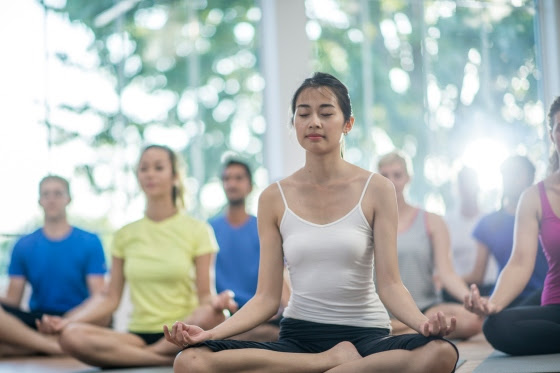
Yoga is a mind-body practice with historical origins in ancient Indian philosophy. Hatha yoga is the branch of yoga that includes physical poses, also called asanas, and is the most widely practiced branch of yoga in the West. Most Hatha yoga classes are a combination of physical postures, breathing techniques, and meditation or relaxation.
And then within the physical practice of yoga, there are different styles of Hatha yoga - some are intense and vigorous, while others are relaxing and meditative. The practice of yoga is one that can be tailored or modified to suit each individual's needs, regardless of age or fitness level. No matter which type you choose, yoga is a wonderful way to stretch and strengthen your body while simultaneously calming the mind.

Yoga Benefits

Yoga can make you stronger, flexible, more focused and alert. It can help you to stay limber and energetic as well. Yoga can also help improve these conditions:
  • Poor blood circulation
  • High blood pressure
  • Arthritis
  • Osteoporosis
  • Limited mobility
  • Lower back pain
  • Difficulty breathing
  • Headaches
  • Tension or stress
  • Depression
Yoga is good for people who haven't been active in a while. It’s also good for people who have certain health conditions like arthritis or osteoporosis. A benefit of yoga is that you can change your exercises to fit your needs. As you become stronger and more flexible with yoga, it becomes easier to do other kinds of exercise like dancing, walking, or swimming.

Yoga can help you:

  • Reduce your risk for injury. Each yoga pose targets specific muscles. This helps you increase your flexibility and reduce your risk for injury.
  • Reduce stress. Yoga can help soothe the mind and lower stress levels. It does this by focusing the mind on the moment and the movements. In scientific studies, people practicing yoga had a greater ability to relieve high cortisol and reduce other parameters of stress.
  • Increase your concentration. A main part of yoga is rhythmic, focused breathing. This can help you focus.
  • Understand the mind and body connection. Yoga requires you to focus all your energy on each movement or pose exactly. This can help you feel the mind and body work together.
  • Gain strength and stamina. More vigorous styles of yoga promote strength and stamina.
  • Improve balance and stability. Balancing poses require you to use your core muscles. This can help you improve your overall stability.
  • Improve posture. Yoga poses strengthen and open tight areas of the body like the shoulders and muscles of the upper back. This can help you keep good posture.
  • Develop body awareness. Yoga requires you to contract or relax specific muscles as you stretch into each pose. This can help you become more aware of your body’s strengths and weaknesses.

Join Touro for Yoga and Stress-Relief: Living Well Seminar.

Holidays can be a very stressful time. Join Wild Lotus Yoga Instructor Kelley Howard Gill to learn yoga moves that can relieve your holiday stress.
Thursday, December 7
5:30 to 6:30 p.m.
Presidents Room, 2nd Floor
Registration is required.
>> CLICK HERE to register online, or call 504-897-8500.
touroinfirmary | December 5, 2017 at 9:40 pm | Categories: Exercise | URL: https://wp.me/p3U9Kg-rc
Comment   See all comments   Like
Unsubscribe to no longer receive posts from Living Well.
Change your email settings at Manage Subscriptions.
Trouble clicking? Copy and paste this URL into your browser:
http://livingwellblog.co/2017/12/05/what-is-yoga/

Monday, December 11, 2017

Free Bone and fat scan

Tulane University is conducting a research project on osteoporosis. If you are eligible to participate, you would receive at no cost to you a Bone Health Assessment, which includes a bone density test.

Compensation for your time and travel is provided for the one-time, 2-hour visit. We will also validate your parking if needed.

Eligible subjects must meet the following criteria
  • Be at least 18 years of age.
  • Female has at least one intact ovary.
  • No severe uncontrolled chronic diseases.
  • Be willing to attend the scheduled exam for bone densitometry and muscle strength measurements and to have a small amount of blood drawn. Body weight less than 300 lb.

If you would like to learn more about your bone and related health and be a participant in this study, please contact us at 504-988-1016 or make an appointment online at http://los.sph.tulane.edu or email: bonestudyneworleans@tulane.edu.


Thursday, November 9, 2017

Making Room for Lymphedema

Lymphedema is not an uncommon secondary effect of cancer treatment. With no cure available, an effective long-term treatment effort is necessary for maximizing a cancer survivor's quality of life.

PUBLISHED November 06, 2017

In early 2010, Kim Brandt was diagnosed and treated for stage 1 rectal cancer. However, in 2013, the cancer was discovered to have metastasized, which then required aggressive treatment. Her education and professional career have been focused on urban planning and local government, and she has found her own patient experience eye-opening in respect to understanding the health care community’s physical needs. In her free time, she enjoys walking her dog, swimming and a weekly yoga class or two.

A few days ago, a rather large box arrived at my home. With the same anticipation I feel on Christmas morning, I opened the box and unpacked its contents. It was my very own compression pump system! As I surveyed all the equipment, my first thought was “Cool - this will really help manage my lymphedema.” My second thought was “Wow- where am I going to store it?” There is no doubt about it, lymphedema weighs you down, as your weight on the bathroom scale goes up.

I am no different than most cancer survivors in that I have secondary effects from my treatment. These include peripheral neuropathy and osteoporosis, both of which require medication and various dietary supplements. But I also have secondary lymphedema, which is soft-tissue swelling due to damage to my lymphatic system


Thursday, March 8, 2018

What are the Major Health Concerns for Women?

There are five major medical conditions that women have the potential of facing in life. These conditions include heart disease, breast cancer, osteoporosis, depression, and autoimmune diseases. Saralyn Mark, MD, senior medical adviser for the Office on Women's Health at the US Department of Health and Human Services, said that it is important for women to consult with their doctor to discuss family medical history, in order to prepare for what they may encounter in their lifetime. It is vital that women become aware of these potential issues, so they can take the correct and efficient steps to find recovery. Understanding your own body is the key to a healthy life.


Saturday, November 18, 2017

Making Room for Lymphedema

Lymphedema is not an uncommon secondary effect of cancer treatment. With no cure available, an effective long-term treatment effort is necessary for maximizing a cancer survivor's quality of life.

PUBLISHED November 06, 2017

In early 2010, Kim Brandt was diagnosed and treated for stage 1 rectal cancer. However, in 2013, the cancer was discovered to have metastasized, which then required aggressive treatment. Her education and professional career have been focused on urban planning and local government, and she has found her own patient experience eye-opening in respect to understanding the health care community’s physical needs. In her free time, she enjoys walking her dog, swimming and a weekly yoga class or two.


A few days ago, a rather large box arrived at my home. With the same anticipation I feel on Christmas morning, I opened the box and unpacked its contents. It was my very own compression pump system! As I surveyed all the equipment, my first thought was “Cool - this will really help manage my lymphedema.” My second thought was “Wow- where am I going to store it?” There is no doubt about it, lymphedema weighs you down, as your weight on the bathroom scale goes up.

I am no different than most cancer survivors in that I have secondary effects from my treatment. These include peripheral neuropathy and osteoporosis, both of which require medication and various dietary supplements. But I also have secondary lymphedema, which is soft-tissue swelling due to damage to my lymphatic system.